
Merri-bek Traffic & Freight Intelligence Report
Independent council-area traffic and freight report generated from SCATS and TIRTL project outputs. Generated: 2026-06-22 16:34
Key findings
Traffic load
- Merri-bek ranks 16 of 31 councils by matched SCATS traffic movements.
- The report covers 126 matched SCATS sites and 17,241.3M cumulative signal movements.
Site-level pressure
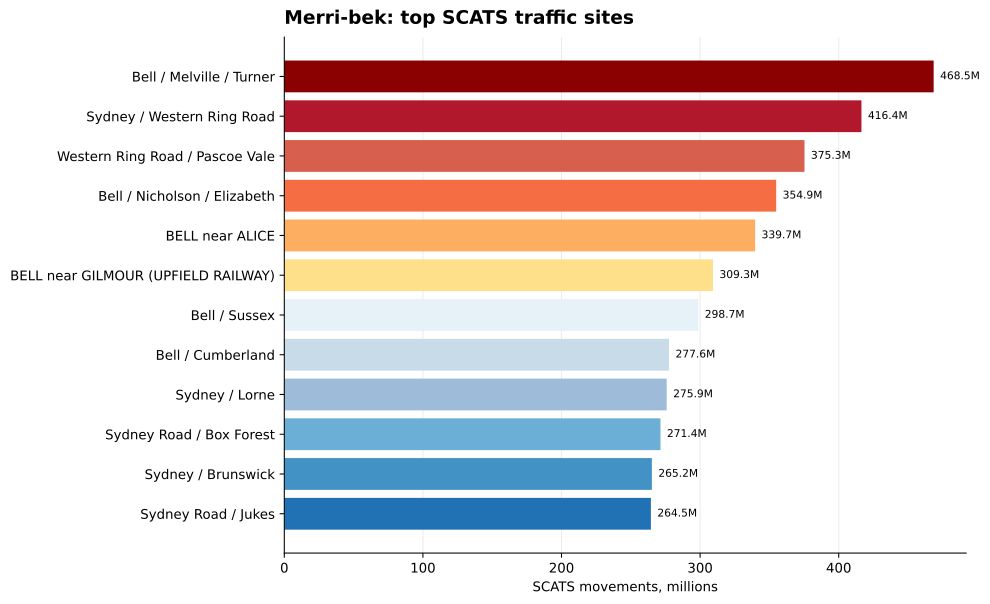
- The highest-volume matched SCATS site is Bell / Melville / Turner in Pascoe Vale South, with 468.5M movements.
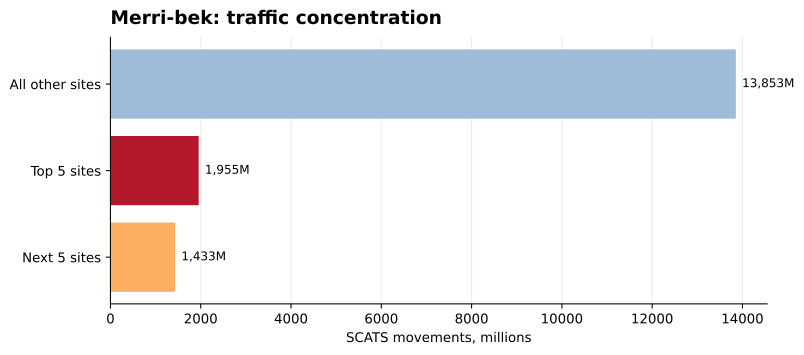
- The top 5 matched SCATS sites account for about 11.3% of the council's ranked SCATS site movements.
- The top 10 matched SCATS sites account for about 19.6% of the council's ranked SCATS site movements.
Freight evidence
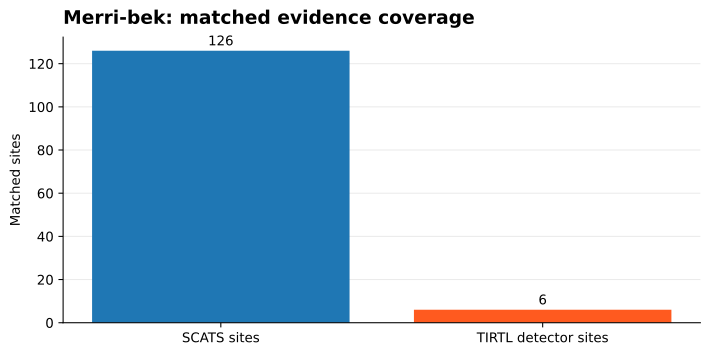
- The current evidence pack has 6 matched TIRTL detector sites for this council.
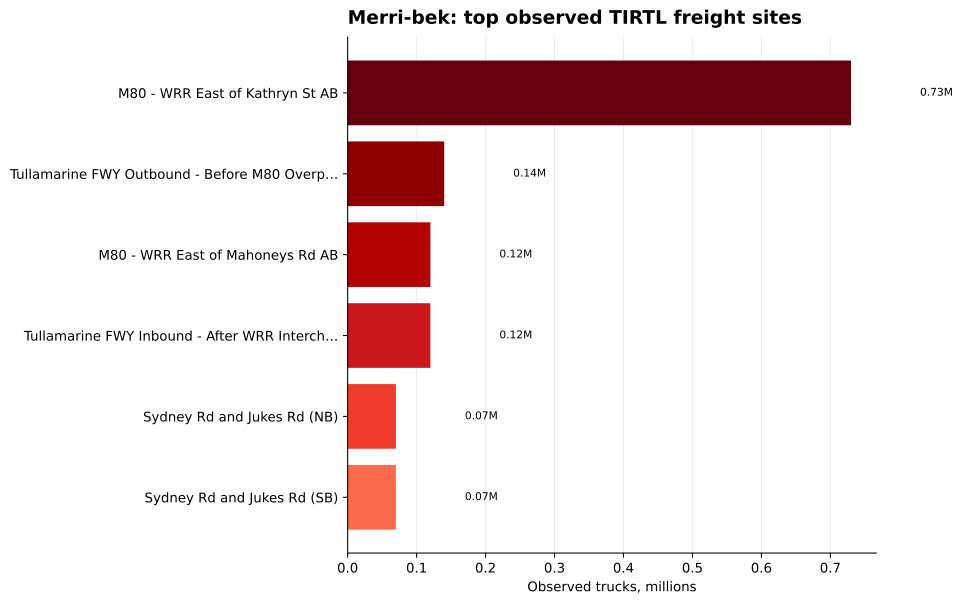
- Those matched TIRTL sites record 1.2M observed trucks, with an overall matched-site truck share of about 3.23%.
- The highest observed freight detector is M80 - WRR East of Kathryn St AB, with 0.7M observed trucks. Its truck share is about 6.68%.
How to read this
- SCATS evidence shows long-period traffic signal movements at matched signal sites.
- TIRTL evidence shows observed detector coverage where matched detectors exist.
- Use the map first to locate the evidence, then use charts and tables for detail.
Useful questions for council / DTP
- Which of the highest-volume SCATS sites align with current local traffic, safety or corridor priorities?
- Do the mapped high-pressure sites match the locations residents and councillors complain about most often?
- Should the highest-ranked sites be reviewed for signal timing, pedestrian safety, freight impacts or state-road advocacy?
- Do the observed TIRTL freight sites require follow-up with DTP, freight stakeholders or neighbouring councils?
Suggested DTP follow-up themes
State arterial / freeway interface advocacy
- Why it appears relevant: The highest-ranked SCATS sites appear to include state arterial, freeway or major corridor interfaces.
- Possible DTP / officer question: Which top-ranked sites are DTP-controlled or state-road interfaces, and what upgrades or operational changes are planned?
- Evidence basis: Top SCATS evidence includes Bell / Melville / Turner.
Network coordination review
- Why it appears relevant: The council has broad SCATS coverage with 126 matched sites.
- Possible DTP / officer question: Should DTP review signal coordination across the broader council network rather than only the largest individual sites?
- Evidence basis: 126 matched SCATS sites; rank 16/31.
| Theme | Why | Possible question |
|---|---|---|
| State arterial / freeway interface advocacy | The highest-ranked SCATS sites appear to include state arterial, freeway or major corridor interfaces. | Which top-ranked sites are DTP-controlled or state-road interfaces, and what upgrades or operational changes are planned? |
| Network coordination review | The council has broad SCATS coverage with 126 matched sites. | Should DTP review signal coordination across the broader council network rather than only the largest individual sites? |
Data periods and interpretation
Long-period cumulative traffic signal movements from the project’s cleaned SCATS layer, labelled in these reports as 2014–2026.
Observed classified-vehicle detector records from the project’s current TIRTL layer. TIRTL coverage is corridor/detector based, not universal council-wide coverage.
SCATS and TIRTL coordinates are assigned to official council/LGA polygons. Suburb labels are geocoded/locality labels and may differ from council boundaries.
Sensor map
Bright blue circles show matched SCATS traffic signal sites. Bright orange-red circles show matched TIRTL detector sites where TIRTL coverage exists. The black outline shows the official council/LGA boundary. Sites are assigned to council areas by coordinate inside the official LGA polygon.
Charts
Top SCATS traffic sites
Merri-bek's busiest matched SCATS sites by cumulative movements.
SCATS traffic concentration
Shows how much traffic is carried by the top five sites, next five sites and remaining sites.
Top observed TIRTL freight sites
Observed truck volumes at matched TIRTL detector sites, where coverage exists.
Matched evidence coverage
Comparison of matched SCATS sites and matched TIRTL detector sites for this council.
Top SCATS traffic sites
| Rank | Site ID | Site / intersection | Geocoded locality | Movements |
|---|---|---|---|---|
| 1 | 3052 | Bell / Melville / Turner | Pascoe Vale South | 468.5M |
| 2 | 2173 | Sydney / Western Ring Road | Fawkner | 416.4M |
| 3 | 2172 | Western Ring Road / Pascoe Vale | Glenroy | 375.3M |
| 4 | 3056 | Bell / Nicholson / Elizabeth | Coburg | 354.9M |
| 5 | 3075 | BELL near ALICE | Coburg | 339.7M |
| 6 | 3083 | BELL near GILMOUR (UPFIELD RAILWAY) | Coburg | 309.3M |
| 7 | 3053 | Bell / Sussex | Coburg | 298.7M |
| 8 | 3050 | Bell / Cumberland | Pascoe Vale South | 277.6M |
| 9 | 2191 | Sydney / Lorne | Hadfield | 275.9M |
| 10 | 2155 | Sydney Road / Box Forest | Fawkner | 271.4M |
| 11 | 3112 | Sydney / Brunswick | Brunswick | 265.2M |
| 12 | 2162 | Sydney Road / Jukes | Fawkner | 264.5M |
TIRTL freight coverage
Top observed TIRTL freight sites
| Rank | TIRTL site | Observed site | Vehicles | Trucks | Truck % |
|---|---|---|---|---|---|
| 1 | TIRTL_226 | M80 - WRR East of Kathryn St AB | 10.9M | 0.7M | 6.68% |
| 2 | TIRTL_135 | Tullamarine FWY Outbound - Before M80 Overpass (NB) | 7.6M | 0.1M | 1.84% |
| 3 | TIRTL_228 | M80 - WRR East of Mahoneys Rd AB | 2.0M | 0.1M | 6.08% |
| 4 | TIRTL_134 | Tullamarine FWY Inbound - After WRR Interchange (SB) | 7.8M | 0.1M | 1.55% |
| 5 | TIRTL_247 | Sydney Rd and Jukes Rd (NB) | 5.4M | 0.1M | 1.31% |
| 6 | TIRTL_248 | Sydney Rd and Jukes Rd (SB) | 5.1M | 0.1M | 1.38% |
CSV evidence pack
Method and interpretation notes
SCATS site coordinates and TIRTL detector coordinates are assigned to official council/LGA polygons using point-in-polygon spatial joins. SCATS figures are long-period cumulative traffic signal movements from the project’s cleaned SCATS layer. TIRTL figures are observed classified-vehicle counts from matched detector sites and should be interpreted as corridor/detector evidence rather than a full council-wide truck census.
The “Geocoded suburb/locality” column comes from the site lookup/geocoding layer. It is useful for orientation, but the council assignment is controlled by the site coordinate falling within the official council/LGA polygon.
Executive summary
Merri-bek ranks 16 across Greater Melbourne councils by matched SCATS traffic movements, with 126 matched SCATS sites and 17,241.3M cumulative movements in the current project layer.
The busiest matched SCATS site is Bell / Melville / Turner in/near Pascoe Vale South, with 468.5M movements.